Do Polyester Clothes Release Microplastics?
Polyester is one of the most common plastics used in the production of clothing, fabrics, and other textiles. A growing body of evidence shows that polyester clothing is a continuous source of microplastic contamination as a result of washing, wearing, and disposal. In order to understand the impact of polyester-derived microplastics on our health and the environment, we need to first understand how they’re created.
Polyester fibers are a major source of global microplastics
Polyester is a synthetic polymer derived from polyethylene terephthalate. Polyester is commonly used because of its strength and elasticity. These properties that make polyester-based clothing strong, also enable the individual polyester fibers to persist once they are released into the environment. Once in the environment, scientists refer to them as fibrous microplastics. Current studies estimate roughly 35 percent of primary microplastics in marine environments come from synthetic textiles, with polyester being the most common [1].
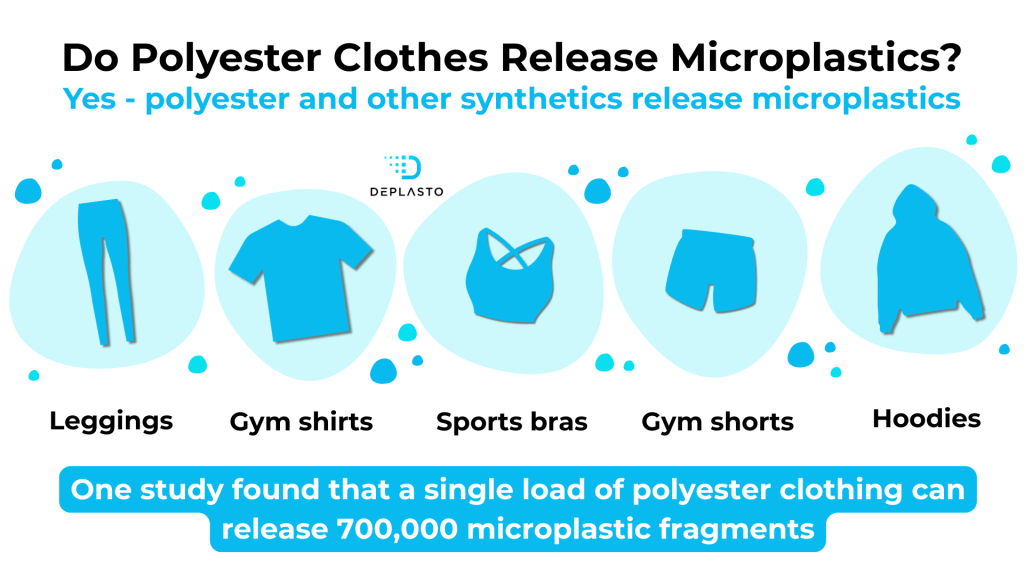
The scale of polyester microplastic pollution is unimaginable. Studies of laundry show that a single wash of polyester or acrylic fabrics can shed hundreds of thousands to millions of microfibers, depending on fabric type and load conditions [1][2][3]. When modeled across global polyester use, projections suggest clothing-related microplastic emissions could reach millions of tons by the middle of the 21st century[1].
Washing polyester clothes releases microplastics
Polyester clothing creates microplastics as a result of the microscopic damage caused by the washing process itself. Agitation inside washing machines creates friction between fibers and yarns, weakening the bonds and causing fibers to detach from the broader web of fibers [3]. These fragments are small enough to bypass filtration and enter wastewater streams.
The construction of the clothing influences the amount of microplastics that are released. Knitted fabrics, like fleece, have looser looped structures that expose more fiber surface area to stress, leading to significantly higher microfiber release compared to tightly woven fabrics washed in the same conditions [1]. The age of the clothes matters too, as studies have shown that repeated washing increases the amount of microplastics that are released.
Heat and laundry detergents accelerate microplastic creation
Warmer water temperatures can induce irreversible structural changes in polyester, weakening the fibers at the molecular level [4]. Everyone’s likely experienced this if they’ve mistakenly washed clothes in a warmer setting or even dried clothes at too high of temperatures. Laundry detergents compound this effect by altering the surface chemistry of the clothing and increasing fiber brittleness, a process that enables more microplastic fibers to be released. Again, as the clothing is repeatedly washed over the years, the number of microplastics released continues to accelerate.
Polyester clothing can also release nanoplastics and chemical additives
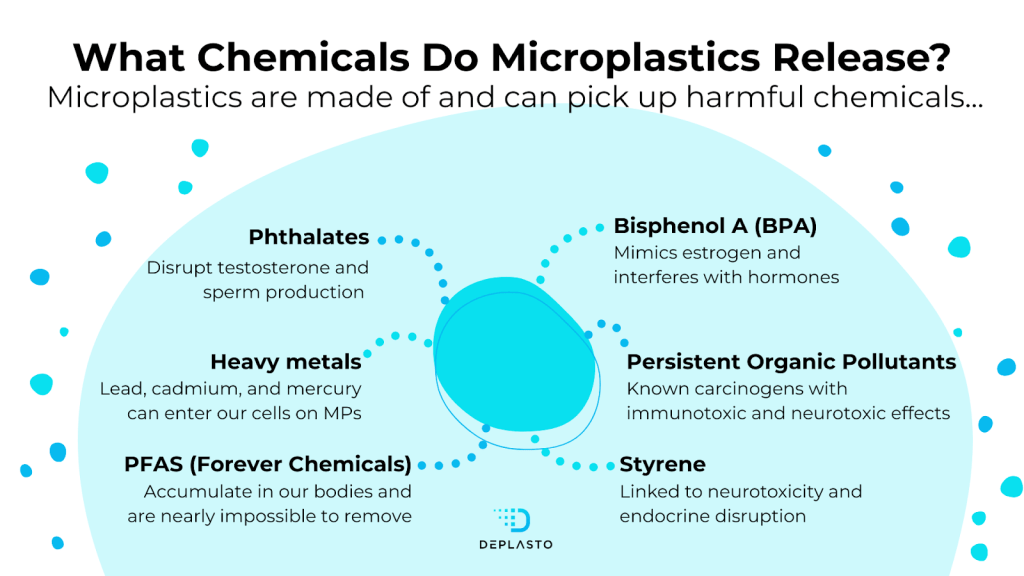
Beyond microfibers, polyester clothing can emit nanoplastics and chemical additives used during manufacturing (LINK TO CHEMICALS). Many polyester-based fabrics rely on surface coatings made from polyurethane, polyacrylates, or fluoropolymers to provide water resistance or durability. These coatings degrade during washing and release nanometer-scale plastic particles that are smaller and potentially more biologically active than the polyester microfibers [3].
Polyester fibers can also act as carriers for chemical additives such as plasticizers, flame retardants, endocrine disrupting chemicals, and heavy metals. These compounds aren’t chemically bound to the polymer backbone of the polyester fibers and can leave the fibers into surrounding environments. For example, they can leave and enter our bodies [5][6].These chemicals can interfere with our hormones, energy production, and gut health.
These polyester microfibers can enter the air, food, and water
Once shed from the larger clothing matrix, polyester microplastics enter the environment. While wastewater treatment plants capture a sizable portion of released fibers, studies have found that they still allow billions of microplastic fibers to enter rivers, lakes, and oceans daily. Those microfibers that are filtered accumulate in sewage sludge, which disgustingly, is applied to agricultural soils, thereby reintroducing microplastics into terrestrial ecosystems [7].
Airborne exposure is another pathway of microplastic exposure that’s frequently overlooked. Polyester microfibers are released through everyday wear, drying, and rubbing against household surfaces. Indoor air studies consistently identify synthetic microfibers as the main component of airborne microplastics. Importantly, these studies have also documented these microfibers in human lung tissue following inhalation [8][9].

Polyester microplastics may cause health issues
The evidence is clear that polyester clothing continuously releases microplastics. These fibers are persistent, capable of spreading easily, and able to carry chemical additives into our bodies and the environment. While research into long-term health outcomes is still developing, the ubiquity of exposure through water, food, and air underscores the importance of mitigation strategies [6][8].
Understanding how and why polyester-based clothes shed microplastics allows us to reduce our exposure and focus on long-term solutions. This is critical for making informed decisions in an environment where synthetic textiles are nearly unavoidable. Obviously, we should be avoiding polyester clothes where possible, and instead turning to traditional fabrics like cotton, linen, wool, and others. While taking these steps won’t completely reduce your microplastic intake, it’s a great first step as part of the broader platform offered by Deplasto.
The Deplasto platform, consisting of a scientifically-backed nutritional supplement, an iOS app for tracking daily microplastic intake, and a portfolio of lifestyle recommendations intended to help you minimize microplastics. Our nutritional supplement is formulated to support your body’s natural detoxification pathways, including oxidative stress management, cellular repair, and antioxidant support. Our microplastic intake app enables you to estimate and track your daily microplastic intake, with each datapoint backed by scientific studies. Our lifestyle recommendations, found in our blogs and in our eBook, have a plethora of actions and advice designed to help you make small changes to minimize microplastics.
Overall, we believe that the best way to eliminate microplastics begins with you and the small changes you make to your daily life. Over time, collectively, we can make a significant difference.

Sources
- Mapping Microplastics in Humans: Analysis of Polymer Types and Shapes in Food and Drinking Water
- Microfiber Emissions from Functionalized Textiles: Potential Threat for Human Health and Environmental Risks
- Micro- and Nanoplastics Produced from Textile Finishes: A Review
- Insights on Microplastic Contamination from Municipal and Textile Industry Effluents and Their Removal Using a Cellulose-Based Approach
- Are Microfibers a Threat to Marine Invertebrates? A Sea Urchin Toxicity Assessment
- Adverse Health Effects of Exposure to Plastic, Microplastics and Their Additives
- A Review of Methods for Mitigating Microplastic Contamination in Biosolids from Wastewater Treatment Plants
- Microplastics in Indoor Air from Birmingham, UK: Implications for Inhalation Exposure
- Effect of Microplastics Deposition on Human Lung Airways